Water Mitigation and Structural Drying in Boynton Beach
Water mitigation in Boynton Beach stops the damage from spreading; structural drying then pulls the hidden moisture out of drywall, cabinets, framing and slab with dehumidifiers and air movers. Where outdoor humidity rarely drops, wet materials won't dry on their own, so the job ends only when moisture readings match dry reference materials. Mitigation starts with a call, any hour, 24/7.
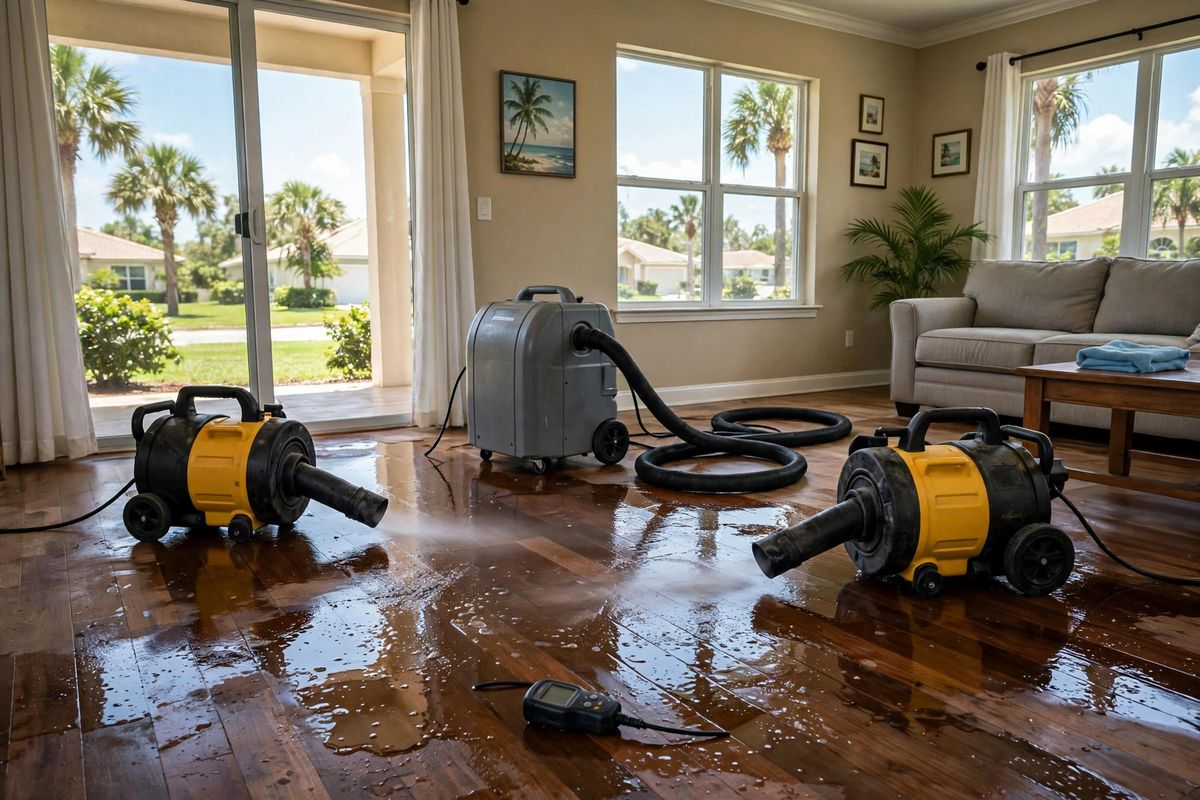
Water mitigation vs water restoration in Boynton Beach
| Water mitigation | Water restoration | |
|---|---|---|
| Goal | Stop the damage from getting worse | Put the property back the way it was |
| When | Immediately, usually the first hours and days | After everything tests dry |
| Typical work | Extraction, removing soaked materials, drying, cleaning | Drywall, baseboards, flooring, cabinets, paint |
| Who usually does it | Water damage mitigation crew | General contractor or rebuild crew |
Both are often handled under one insurance claim, but they are separate stages. Rebuild details are on water damage repair and rebuild.
Water categories: how dirty is the water in your Boynton home?
The industry standard for water damage, IICRC S500, sorts water into three categories. The category decides what can be dried and what must be removed.
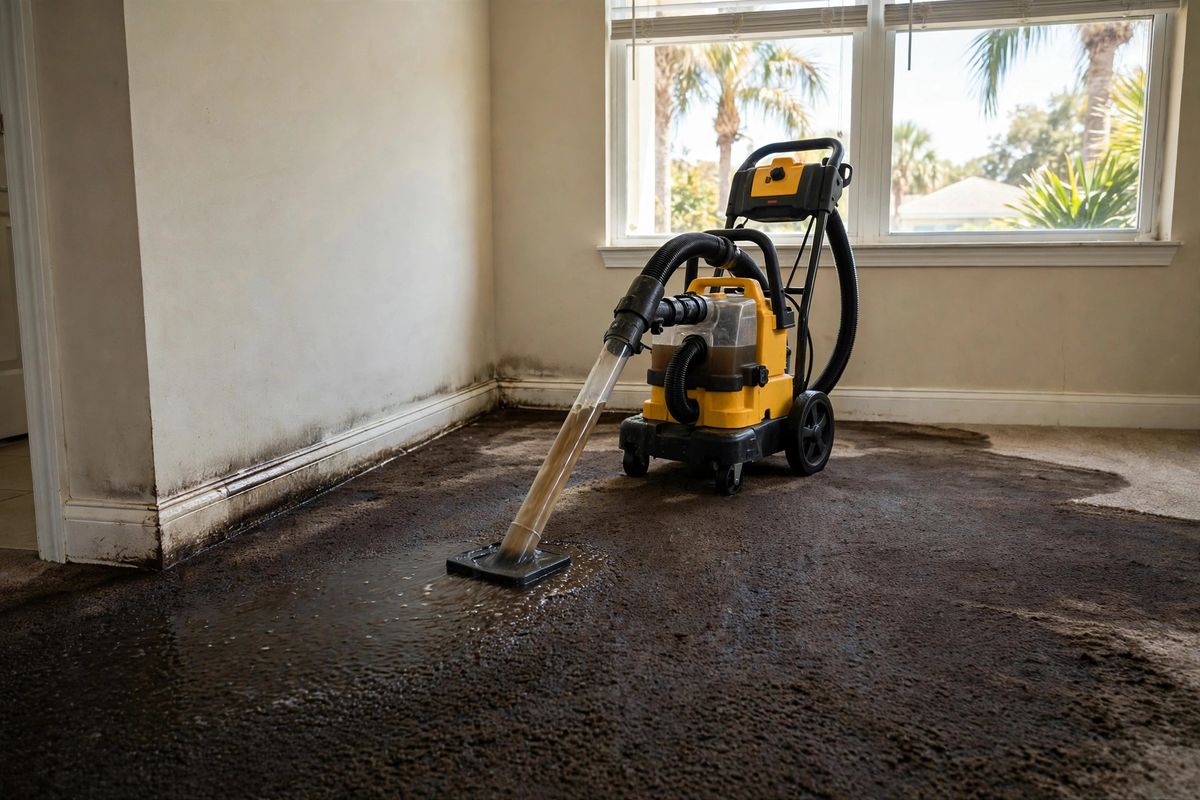
| Category | What it is | Common examples | What usually happens to porous materials |
|---|---|---|---|
| Category 1 | Clean water | Burst supply line, ice maker line, water heater supply | Often dried in place if handled quickly |
| Category 2 | Gray water with some contamination | AC condensate overflow, washing machine, dishwasher | Cleaned and dried; carpet pad often replaced |
| Category 3 | Grossly contaminated water | Sewage, outside floodwater, king tide water | Removed and replaced; area sanitized |
Water left sitting can move up a category over time.
Water classes: how much of your Boynton home is wet?
The class describes how much water soaked in and how hard it will be to dry. It guides how much drying equipment is needed.
| Class | What it means | Typical example |
|---|---|---|
| Class 1 | Small area, little water absorbed, mostly low-porosity materials | A small spill on tile caught quickly |
| Class 2 | A whole room affected, with carpet and walls wicking water up | A supply line leak that soaked a bedroom |
| Class 3 | Most saturated: walls, ceilings, insulation and floors wet, often from above | A ceiling soaked by an AC overflow or a unit above |
| Class 4 | Water trapped in dense materials that dry slowly | Hardwood, concrete slab, plaster, terrazzo |
Drying equipment used in Boynton Beach homes, and what each piece does
- Extractors pull standing water out of floors, carpet and pad. Removing liquid water is far faster than evaporating it.
- Dehumidifiers remove moisture from the air so wet materials can release theirs. LGR (low grain refrigerant) and desiccant units are common.
- Air movers blow across wet surfaces to speed evaporation.
- Wall and cavity drying systems push dry air into wall cavities or under cabinets through small openings.
- Moisture meters measure moisture inside drywall, wood and concrete.
- Thermal cameras help spot cool, wet areas behind walls and ceilings, which are then confirmed with a meter.
- Air scrubbers filter the air when demolition, mold or contamination is involved.
How long does structural drying take in Boynton Beach?
Most residential drying takes several days, but there is no fixed number. Drying time depends on:
- How much water soaked in and how long before extraction
- The materials: drywall dries faster than hardwood, concrete or terrazzo
- Whether walls, cabinets or flooring had to be opened
- Indoor humidity and temperature
Drying is finished when moisture readings show materials are at dry levels, compared with unaffected areas of the same material. A surface that feels dry can still hold water inside.
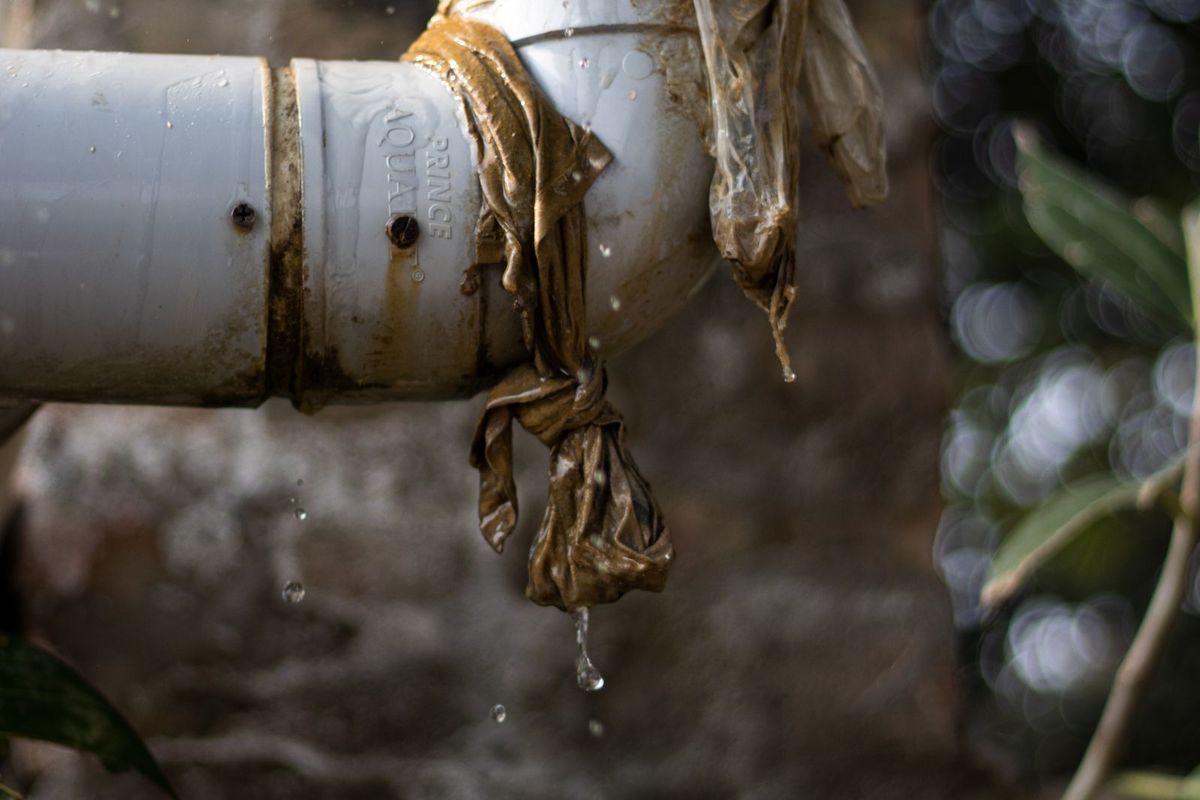
How dryness is measured in a Florida home
- Dry standards are set by reading an unaffected wall, floor or cabinet of the same material.
- Wet areas are mapped and marked on day one.
- Readings are retaken at the same spots on each visit and logged with the date.
- Equipment is adjusted based on what is drying and what isn't.
- Drying ends when wet areas match the dry standards.
That daily log is also useful documentation for your insurance claim.
Why Florida humidity changes drying
In many dry climates, wet materials lose moisture to the air on their own. In South Florida, outdoor air is often already humid, so wet drywall, cabinets and slabs hold their water. That is why drying here relies on dehumidifiers running inside a closed, air-conditioned space, why windows usually stay shut during drying, and why the EPA's advice to dry wet building materials within 24 to 48 hours to prevent mold matters so much. See mold after water damage.
How much does water mitigation cost in Boynton Beach?
In Boynton Beach, local cost data puts water mitigation and drying at roughly $16 to $18 per square foot, so a wet area of about 200 square feet often runs around $3,100 to $3,600 (Boynton Beach cost data). Most local water damage restoration jobs fall between about $2,000 and $8,500, and losses with sewage or floodwater often run $5,000 to $15,000. The size of the area, the water category and class, and the number of drying days drive the price. Rebuilding is usually separate. Your exact price depends on an inspection. See the water damage restoration cost guide.
Boynton Beach water mitigation FAQs
What is the difference between mitigation and restoration?
Mitigation stops the damage from spreading: water extraction, removing soaked materials, drying and cleaning. Restoration puts the home back together afterward: new drywall, baseboards, flooring, cabinets and paint. Mitigation comes first, and rebuild should start only after everything tests dry.
How long does structural drying take?
Most homes take several days, but it depends on how much water soaked in, the materials, and humidity. Dense materials like hardwood, concrete and terrazzo take longer. Drying is finished when moisture readings match dry areas of the same material, not on a set schedule.
Can I use household fans to dry water damage?
Fans help with a small surface spill, but they rarely dry walls, cabinets, carpet pad or a concrete slab. In Florida's humidity, fans without dehumidification can just move damp air around. For anything beyond a small, quickly caught spill, professional dehumidifiers and moisture readings are needed.
Should I open windows to help drying?
Usually not in South Florida. Outdoor air is often more humid than indoor air, so open windows can add moisture and slow drying. Keep the home closed and the AC running, unless a professional advises otherwise for your situation.
How do you know when drying is finished?
Moisture meters compare readings in wet areas with dry areas of the same material. When the wet areas match the dry ones on repeated checks, drying is done. A logged record of those readings also supports your insurance claim and shows the rebuild can safely start.
Do I have to move out during drying?
Usually not. Drying equipment is noisy and adds heat, but most families stay. Moving out may make sense with sewage, mold, wide flooding or when equipment fills the bedrooms. Keep children and pets away from equipment and cords.
Get your Boynton Beach home dried the right way
In Boynton Beach humidity, "it feels dry" isn't dry. The job ends when the meter says so, and you should see those numbers in a drying log. Stop the source, get the water out, and call us 24/7 to start drying the right way.
Watch drying equipment at work on a wet floor. Video plays only when you press play.
Boynton Beach, FL Map
Find water damage help across Boynton Beach, FL. Call (561) 264-1892 for fast help.
Get help with your water damage
Call now or send your details, and keep photos of everything.